
AltaAI Logo
Canada Flag
AltaAI Infrastructure Telemetry

Grounded Real-Time Telemetry
and Remote Operations Control.

Sentient is a failure-tolerant operations plane engineered to manage, supervise, and control high-density liquid immersion cooling pods in real-time. By bridging telemetry ingestion with active fail-safes, we prevent localized outages before they occur.

High-Scale Failure-Tolerant Ingestion Pipeline

Physical telemetry can be unreliable over WAN connections. Sentient is built to survive network partitions through durable buffering. Powered by Redis Streams backed by continuous Append-Only File (AOF) persistence, the pipeline absorbs event bursts up to 1,000 events/second without data loss.

An idempotency engine enforces strict database constraints, preventing duplicate events from corrupting historical metric sequences during retry intervals.

Cryptographic Command Verification

Every remote command frame (such as valve adjustments or power cycles) must resolve HMAC-SHA256 request headers within a 60-second temporal window, locking out replay attacks.

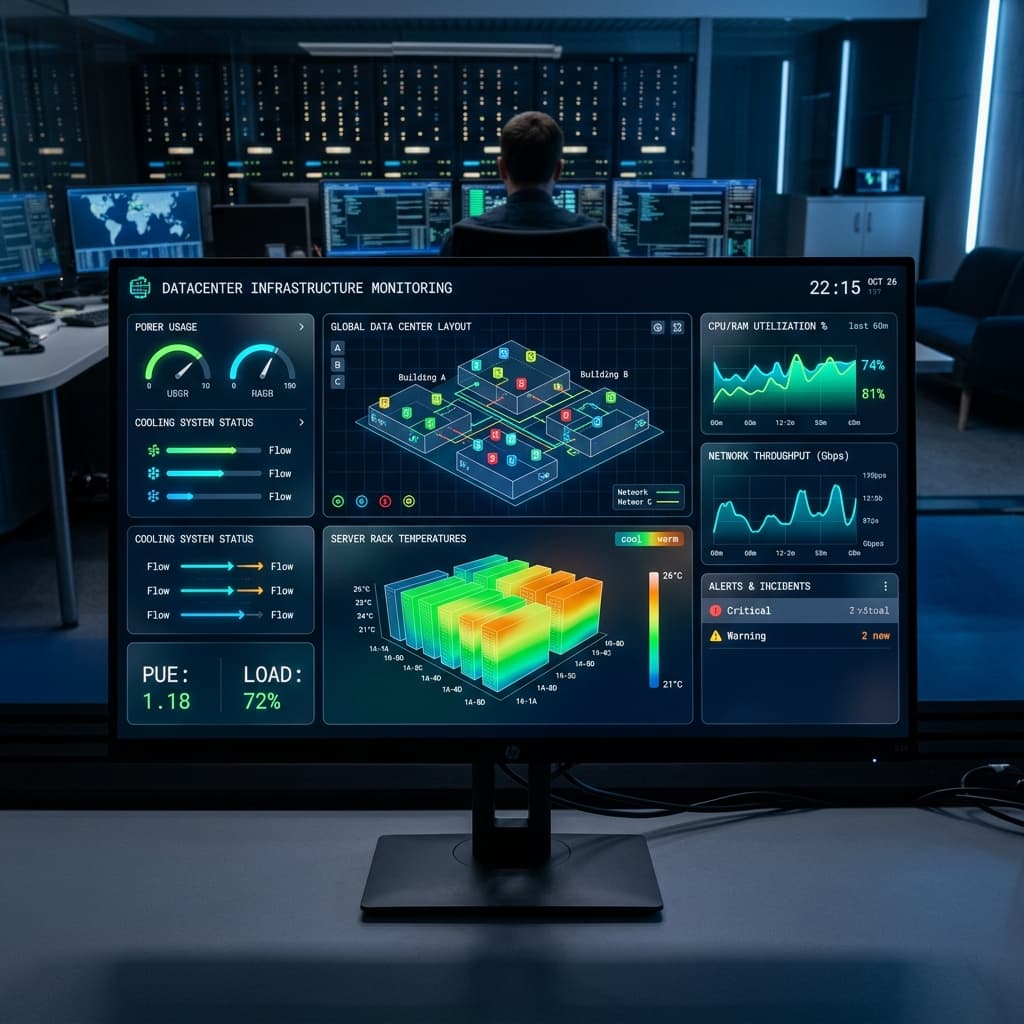
Sentient NOC Platform Kinetic Mosaic HUD Interface

Fleet Sentinel Diagnostics

Sentient evaluates data center health continuously across primary physical parameters:

Signal Integrity (Connectivity)

Tracks active 5-second pulse heartbeats. If a pod falls offline for more than 25 seconds, it is automatically flagged as isolated.

Thermal Equilibrium (Thermodynamics)

Monitors input and output coolant temperatures relative to ambient facility air, keeping fluid temperatures within safe thresholds (maximum 45°C).

Fluid Barrier (Hydraulics)

Integrates leak detection sensors with real-time fluid expansion volume analysis to identify primary loop leaks immediately.

Kinetic Harmony (Mechanics)

Performs continuous spectral vibration analysis (RMS) to isolate pump wear or mechanical imbalances before physical failures occur.

Performance Specifications & SLOs

Metric CategoryPerformance Specification
Ingest Latencyp95 < 50ms API response time
Processing Delay< 1.0 second persistence latency under steady state
Database EngineTimescaleDB Hypertables + JSONB Snapshots
Alert Latency< 10 seconds from hardware signal to operator HUD
Command Failsafe60-second command TTL with mandatory cryptographic verification
Telemetry Cadence5-second continuous heartbeat intervals per active pod

Sentient NOC Telemetry FAQ

How does the Sentient platform prevent false telemetry alarms?

Sentient employs anti-flap buffering. Rather than triggering immediately on single-sensor spikes, the system requires a series of out-of-bounds readings or corroboration from adjacent spatial sensors (such as matching temperatures from neighbor pods) before escalating alarms.

What databases are used to store historical telemetry?

High-velocity timeseries metrics are persisted in a TimescaleDB hypertable (`telemetry_raw`), optimized for rapid queries. State snapshots and diagnostic override configurations are stored in indexed PostgreSQL JSONB columns, balancing ingestion velocity with query ease.

Is remote pod command control secure from WAN-side manipulation?

Yes. The remote-control path enforces multi-factor cryptographic signatures. Every valve or power frame is signed with HMAC-SHA256 headers using keys stored in physical hardware TPM 2.0 modules, meaning commands cannot be replayed or altered over the wire.